Every job I've ever done has a handover date. It's the day the customer gets their kitchen back, the day the bathroom stops being a building site and starts being a bathroom again. Everything on the job bends round it. The tiles and units get ordered for it, and every day of fitting is planned back from it. Take the date away and something strange happens to even a good tradesman. The job doesn't stop, it just stops finishing.
I've watched it happen on jobs. With no date, there's always one more thing worth doing first. Re-cut that piece. Try the grout in a different colour. Sort the van out before starting the next room. Every one of those is a reasonable decision on its own. Put them together and a two-week job takes six.
The same thing happens when we start rebuilding a life, and it's harder to spot, because there's no customer standing in the doorway asking when they can have their house back.
Preparing feels like progress
When you're starting something new, preparing is genuinely enjoyable. You're learning, you're busy, and every day something exists that didn't the day before. A plan, a website, a course you've signed up for, a notebook full of ideas. You go to bed feeling like you've moved forward.
And you have, a bit. The trouble is that none of it has been tested by the one thing that matters: the moment you put it in front of somebody and find out what happens.
That moment is uncomfortable. It's the point where the idea can be rejected, where people can say no, where you find out whether the thing you've been building actually works. So, without ever deciding to, we put it off. Not by doing nothing, but by doing more preparation. Preparation is the most respectable hiding place there is, because from the outside it looks exactly like hard work.
Preparation is the most respectable hiding place there is, because from the outside it looks exactly like hard work.
The question I ask myself every morning
I'm writing this about two weeks before I launch a new business. I've been building it for months, around a full-time job on the tools, and designing systems is one of the things I'm genuinely good at. It's also, I've realised, one of the places I'm most comfortable hiding.
So every morning I ask myself one question: am I building something, or am I putting it in front of people?
Building isn't wrong. You can't hand over a kitchen you haven't fitted. But if the answer has been "building" for weeks on end, it's usually a sign that the scary part is being avoided, not that the work genuinely isn't ready.
Try asking it of whatever you're working on. The career change you're researching, the business you're planning, the conversation you keep meaning to have. Be honest about the answer.
Why a date works
There's an old observation, usually called Parkinson's law, that work expands to fill the time available for it. Give a job six weeks and it takes six weeks. Give it no deadline and it takes forever, or never quite finishes.
A date turns "when it's ready" into "on the thirteenth". That changes the question you ask every day. It stops being "what else could I improve?" and becomes "what has to be true by then?" The first question has no end. The second one gives you a list, and a list can be finished.
The date also makes the scary part unavoidable in a useful way. You're no longer deciding whether to put yourself out there, that decision's already made. You're only deciding how to get ready for a day that's coming either way.
Say it out loud
A date you keep in your head is easy to move. Nobody knows, so nobody notices when it slips, and you can tell yourself it was only ever a rough idea.
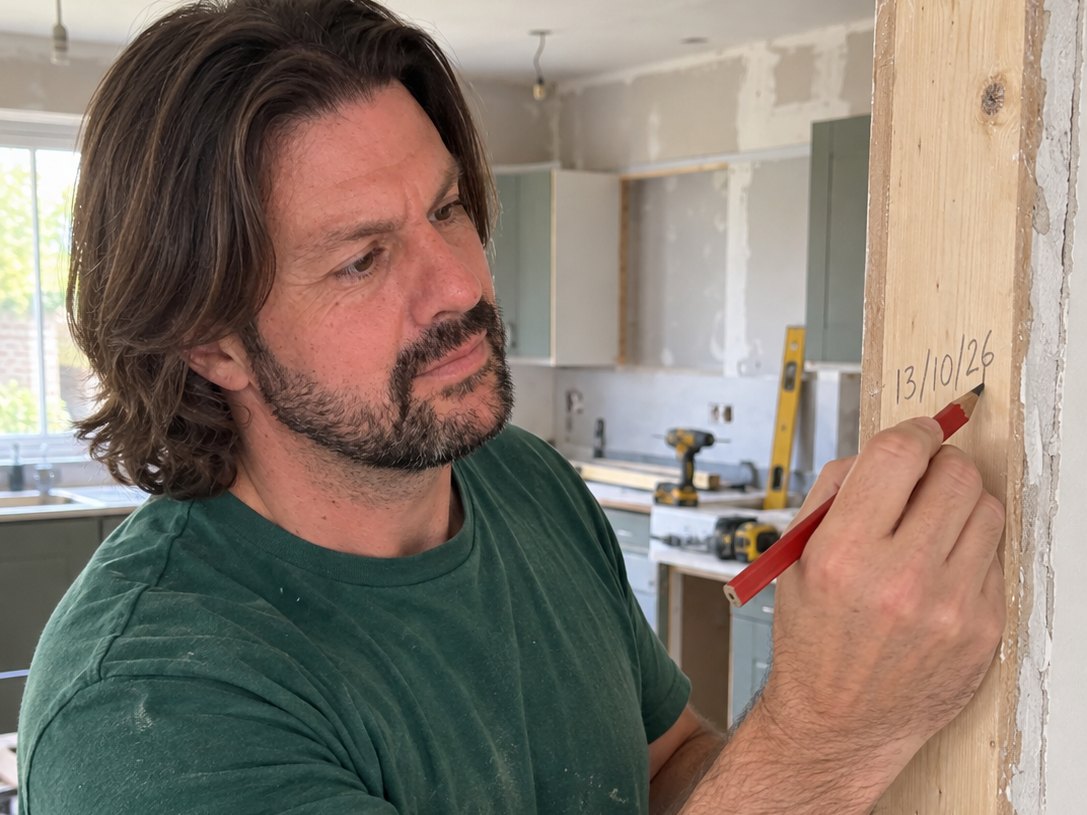
A date you say out loud to someone else is harder to move. It doesn't need to be a big announcement. Tell your partner. Tell a mate at the pub. Write it on the calendar on the kitchen wall where everyone in the house can see it. On a job, the handover date is agreed with the customer, which is exactly why it holds.
I've said mine publicly, on camera, in this week's episode of The Build. The thirteenth of October. Now I can't quietly push it back without explaining why to everyone who's watching, and that's the point.
Setting a date that holds
A handover date on a job isn't picked at random, and yours shouldn't be either.
- Work back from the date, not forward from today. List what genuinely has to be true on the day, and only that. Everything else goes on a list for afterwards.
- Be honest about your hours. If you're working full time, you haven't got a full-time week to give it. I'm back on site full time a week before my launch, so most of what's left gets done in the evenings. The plan has to fit the week you've actually got.
- Separate "has to work" from "would be nice". On a job, the tiles have to be on the wall by handover. The fancy trim can follow a week later and nobody minds.
- Keep the date when the plan changes. Something will go wrong. Something did for me this week. Change how you get there, reduce what you do on the first day, start smaller. Move the date only as a last resort.
Your next step
Pick the one thing you've been preparing for longest. Give it a date, somewhere between two weeks and two months away. Write down the three things that genuinely have to be true by then. Then tell one person.
If you'd like a simple way to check in on it every week, Get The Weekly Reset: free, five quick questions, nothing to buy.