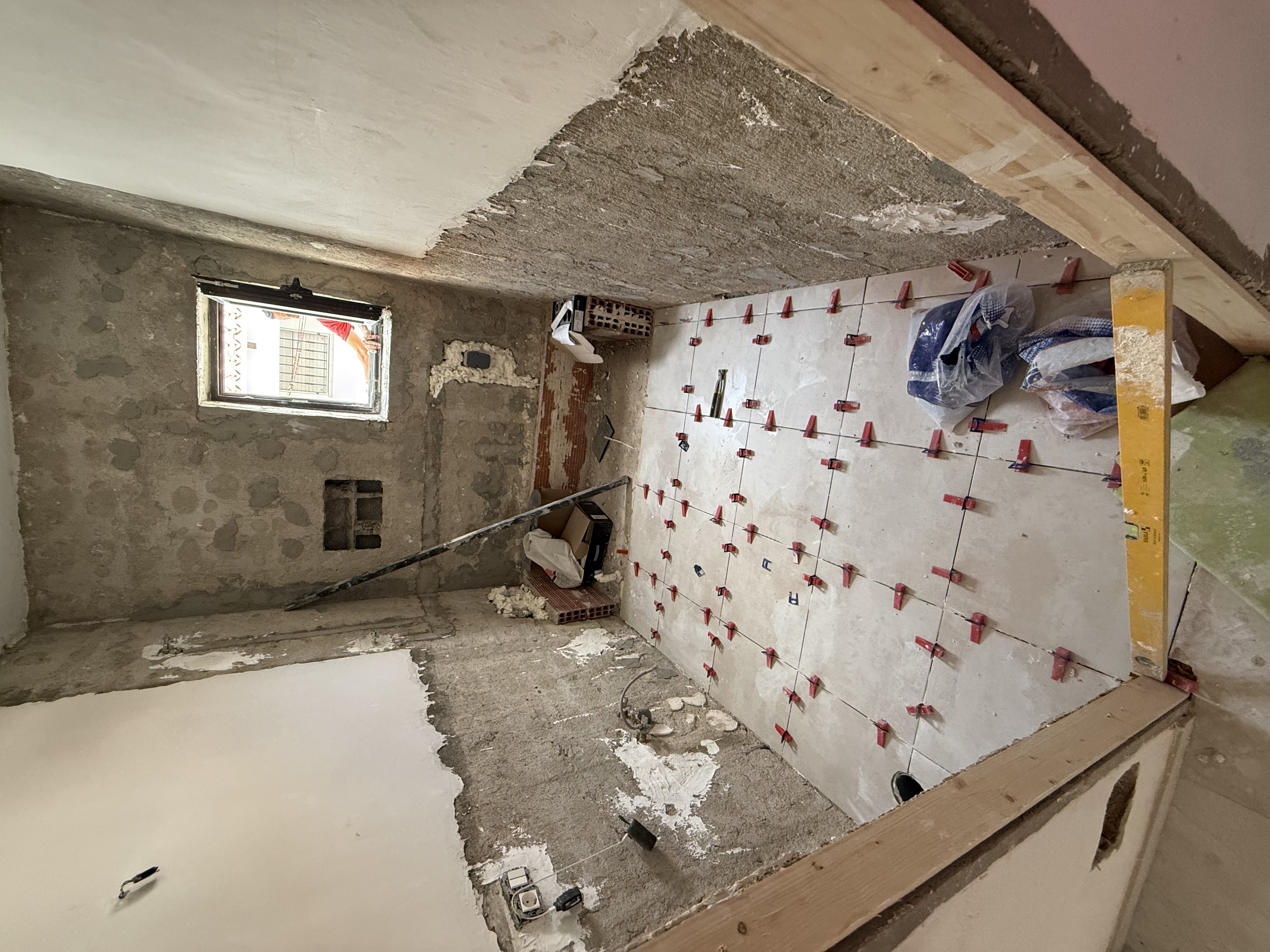
There is a thing that can happen on a kitchen or bathroom refit when the schedule slips and somebody panics. The call goes out to run every trade at once. Get the plumber in while the electrician is still chasing walls, start the plasterer before the first fix is signed off, have the tiler standing in the doorway with his bucket while the floor is still wet. You can picture the result. Trades standing on each other's cables. Work done, then undone, then done again. A room full of people and no progress. By Friday everyone is exhausted, behind and blaming each other.
Anyone who has worked in the trades knows the cure, and it is boring. An order of works. Strip out before first fix. First fix before plaster. Plaster before second fix. Paint near the end. Nobody follows that sequence out of respect for tradition. It gets followed because each stage physically depends on the one before it, and because the house usually has people living in it while the work goes on, so the place has to stay workable. You keep one bathroom running. You keep the kettle reachable. The job is designed around the fact that life continues while the job happens.
Now look at what a man does when he decides, somewhere past forty, that his life needs sorting out. He runs every trade at once.
The overhaul
You know the shape of it because you have probably drawn one up. It usually happens on a Sunday evening, that strange hour when the week ahead still looks infinitely cooperative. Gym before work, starting tomorrow. The diet starts tomorrow as well. So do the reading, the early nights, the side business, the phone call to the old friend, and the spreadsheet that will finally sort the money out. Seven changes, launched together, by a man who was too tired to cook a proper dinner on Thursday.
I am not mocking the impulse. The impulse is the best thing in the whole picture. A man who drafts an overhaul has admitted that something needs to change, and that admission costs more than people realise.
What I am questioning is the build method. As a build method, the overhaul has a flaw you could spot from the end of the street: it was designed by Sunday-evening optimism for a man who does not exist. A man with no job, no family, no history and no fatigue. The real man, the one who has to live it, walks into Wednesday, hits one bad day, misses one session, and the whole plan falls over.
He does not conclude that the plan was overloaded. He concludes that he is weak. Every failed overhaul files another piece of evidence against him, and the next attempt starts with less belief than the one before. A failed overhaul leaves the room in worse condition than it found it.
Seven changes at once fail for the same reason seven trades in one room fail: they all draw on the same supply at the same time. On a refit, that supply is space, sequence and access. In a life, it is attention and energy, and there is only so much of each. Willpower is one tradesman. Send him to seven rooms at once and he does nothing useful in any of them.
Willpower is one tradesman. Send him to seven rooms at once and he does nothing useful in any of them.
Capacity sizes the job
You size the day's work to the hands and the hours you actually have, never to the ones you wish you had. If the plasterer has let you down and the tiles have not been delivered, you do not pretend otherwise and press on with the full programme. You pick the work that can be done well that day, and you do that.
Nobody extends this basic courtesy to themselves. A man who is sleeping badly, worried about money and carrying the end of a marriage will sit down and assign himself a programme that would make a well-rested twenty-five-year-old sweat. It looks like ambition. On a job you would call it what it is, a planning failure.
The size of the next action has to come from an honest look at what you can lift today, and that number changes week to week. On a strong week, the next action might be substantial. In a rough season, it might be one phone call, one walk, one form finally filled in. Sizing the work down to match what you have is accurate planning, and it is the difference between a plan that survives Wednesday and a plan that does not.
The next brick, inside a day
The next brick is one action. Chosen because it matters, sized to the capacity you actually have, and done within twenty-four hours. Its plainness is the point.
Why one? Because a wall only ever goes up one brick at a time, and a tiled wall one tile at a time. A tiler facing a bare wall does not experience the wall as overwhelming, because the wall is never the job. The tile in his hand is the job. He sets it, checks it is level, and reaches for the next. Repeat that, unhurried, and a finished room appears. It is the least dramatic thing you will ever watch.
Why inside twenty-four hours? Because an intention left longer than a day tends to drift into that comfortable country called someday, where nothing has an address. Act inside a day, while it is still fresh, and you produce something better than progress. You produce evidence. A kept promise to yourself, witnessed by the only witness who counts.
Confidence works the same way it does on a job: it arrives after the evidence, never before. You do not feel ready and then lay the brick. You lay the brick, and readiness turns up later, asking what all the fuss was about. Motivation takes days off. A laid brick stays laid.
A single brick can look absurd next to the size of what a man is facing. Set it against the overhaul's record, though, and the maths changes. The overhaul promises seven rooms and delivers a pile of half-finished work and another entry in the evidence file against you. The brick promises almost nothing and delivers, brick after brick, a wall. Momentum in a life is what it is on a job: yesterday's finished work making today's work slightly easier to start.
Where this goes next
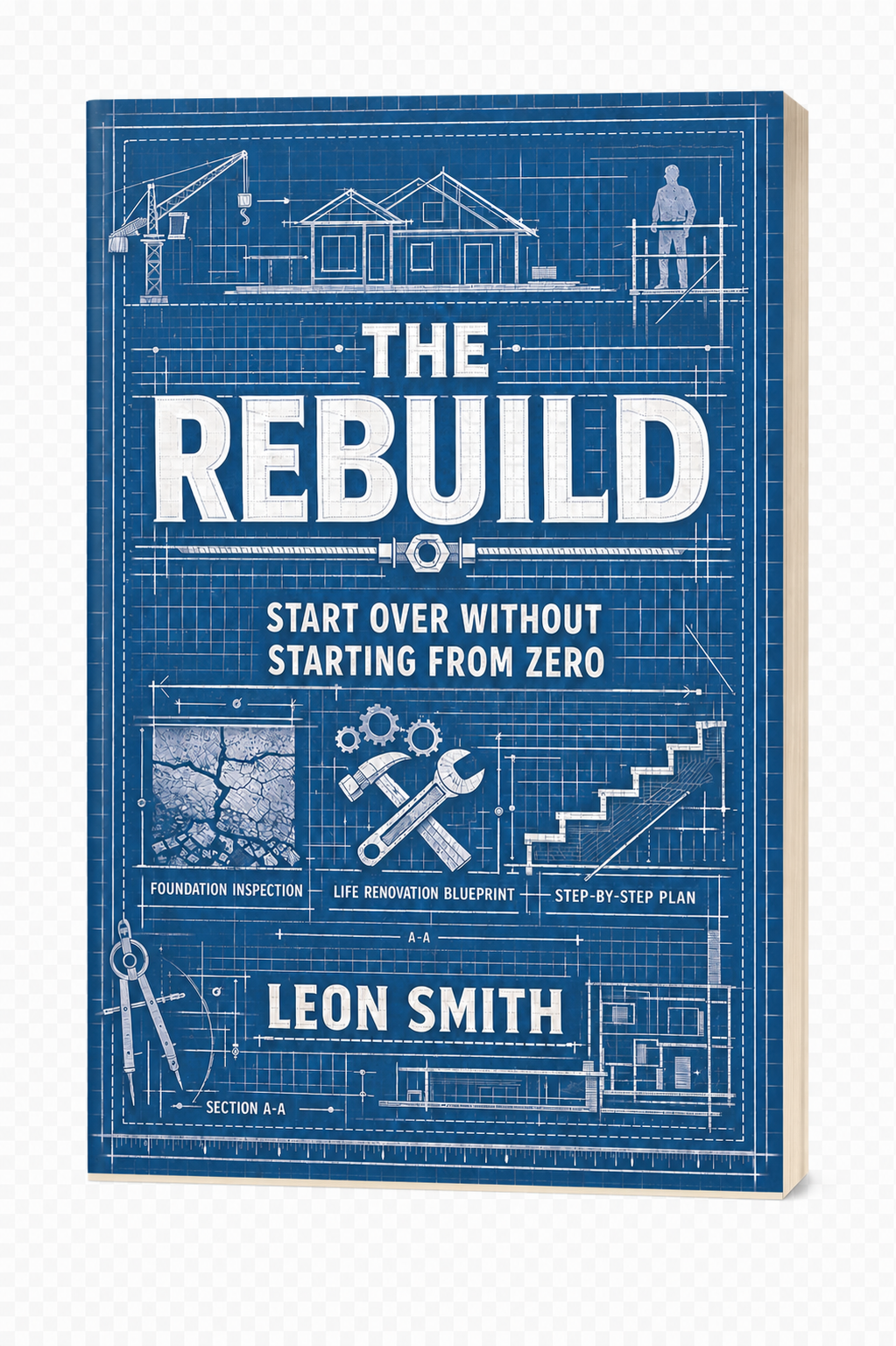
The same next-brick approach runs through the seven pillars I teach free in The Rebuild Series on YouTube, Facebook and Instagram: clarity, release, reframe, direction, design, commit and momentum, each taken one brick at a time. The book, The Rebuild: Start Over Without Starting From Zero, is out now on Kindle and in paperback.
You do not need either to start. Anyone can start this today without buying anything from me or anyone else.
Your next brick
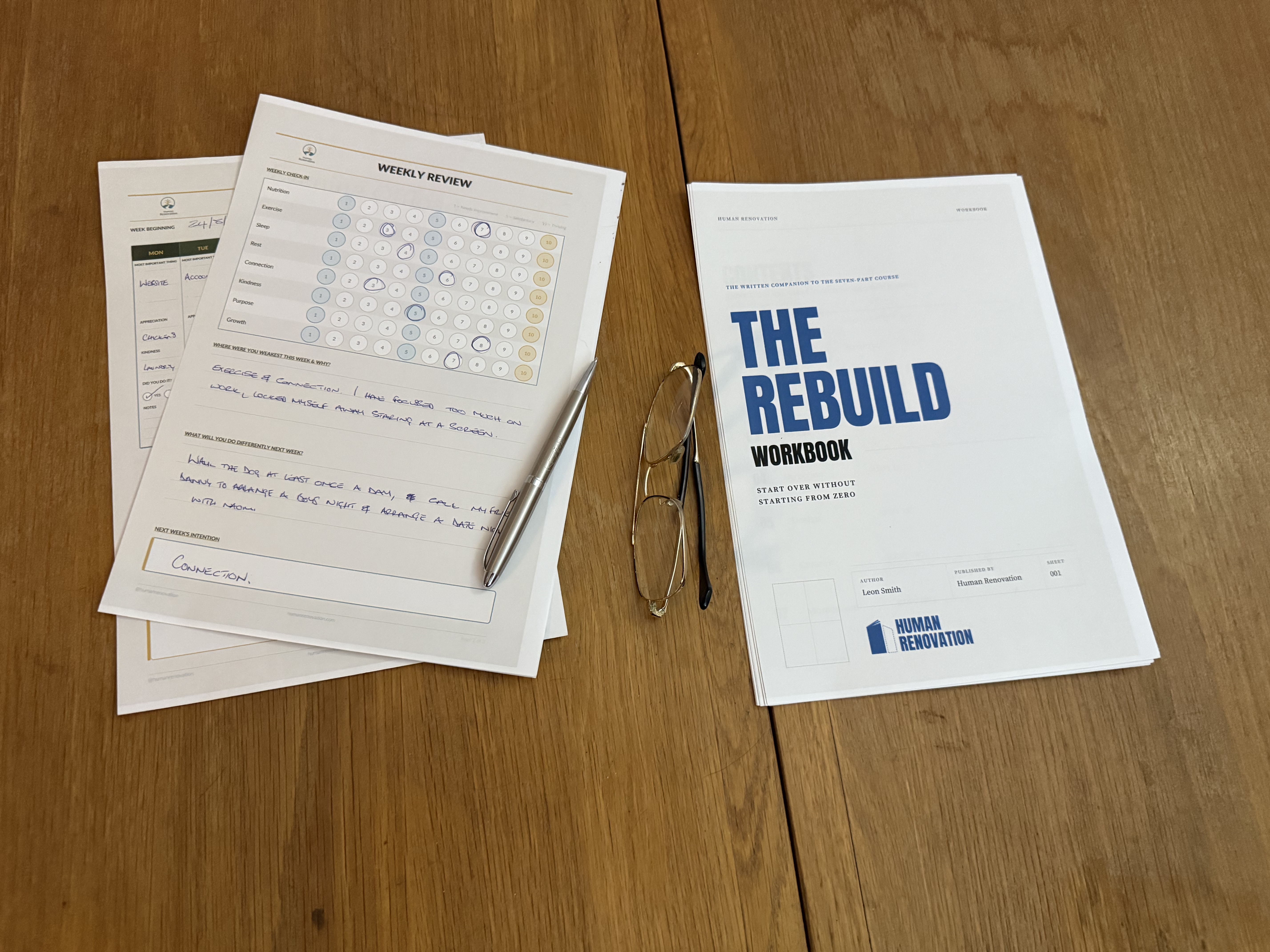
Take an honest look at what has actually got capacity this week. Pick the one action that would matter most. Make it small enough to survive your worst likely day. Do it before this time tomorrow. Then pick the next one.
Lay the next brick. Then the one after that.
Get The Weekly Reset to choose your next brick each week: free, five quick questions, nothing to buy.